Aggregators Refine Slot Mechanics to Align With Operator Specifications in Expanding Markets
Avery Schmitz · Jul 14, 2026
Aggregators Refine Slot Mechanics to Align With Operator Specifications in Expanding Markets
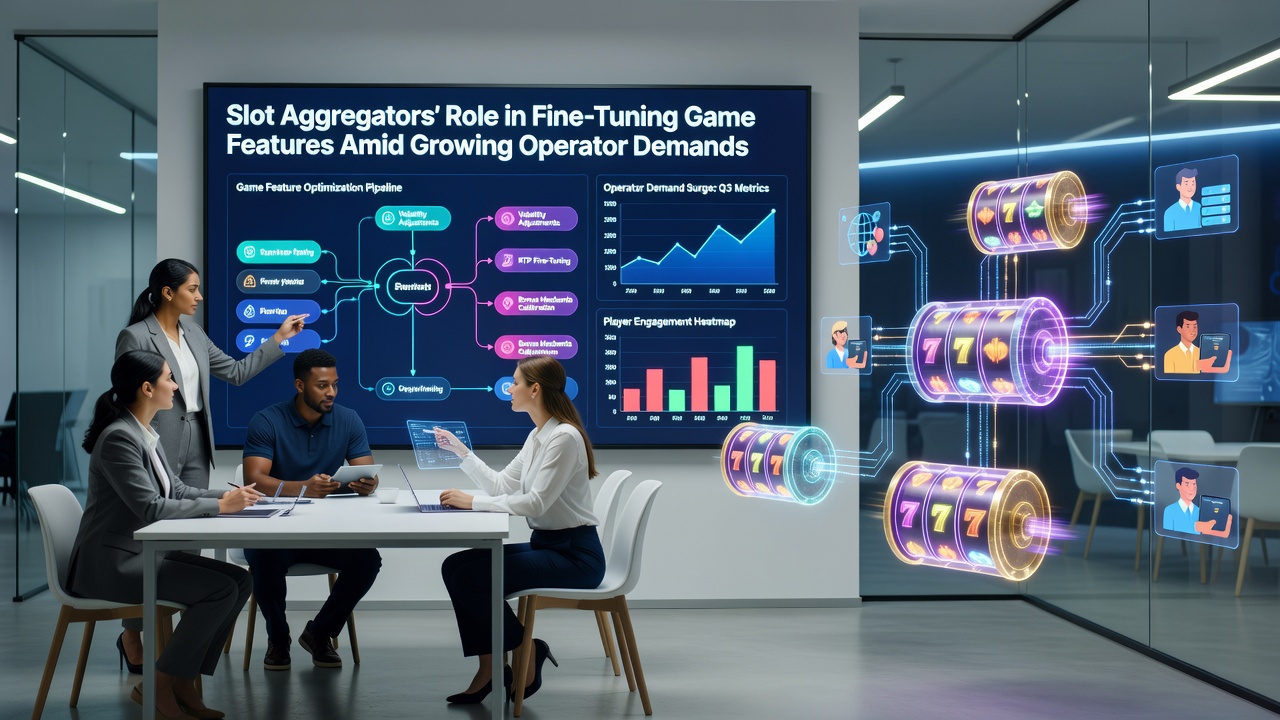
Slot aggregators have taken on expanded responsibilities in recent years as operators request precise adjustments to game elements including volatility profiles, bonus trigger frequencies, and reel configurations. These platforms serve as intermediaries between game studios and casino networks, handling integration tasks that require ongoing modifications to match regional player behaviors and regulatory frameworks. Data from industry reports shows that aggregator involvement in feature tuning increased notably through the first half of 2026, with particular activity recorded in July when several major operators updated their content portfolios.
Feature Adjustments Through Aggregator Platforms
Operators frequently specify changes to multiplier ranges or free spin structures before a title reaches their lobbies, and aggregators execute these requests by working directly with developer APIs. Research indicates that such modifications often involve recalibrating return-to-player percentages within approved regulatory bands while preserving core game mathematics. One documented case involved an aggregator adjusting scatter symbol probabilities across a portfolio of 40 titles to meet performance targets set by a North American operator group.
Those who manage aggregator systems note that these tweaks occur without altering the original studio code in most instances. Instead, configuration layers allow selective activation of features based on operator contracts. Figures released by the American Gaming Association reveal that customized bonus mechanics appeared in over 65 percent of new aggregator-distributed releases during the second quarter of 2026.
Handling Operator Volume and Technical Demands
Growing operator networks require aggregators to process simultaneous updates across dozens of jurisdictions. This workload has prompted development of standardized toolkits that enable rapid testing of volatility shifts or payline variations. European Gaming and Betting Association documentation highlights how these toolkits reduced average deployment times by 22 percent compared with earlier manual processes.
Yet the volume of requests continues to climb. Aggregators report handling an average of 12 feature modification tickets per active studio partnership each month, with July 2026 showing elevated activity tied to summer promotional calendars. These adjustments range from simple RTP band selections to complex changes in progressive jackpot contribution rates.

Regional Compliance and Customization Patterns
Different markets impose distinct constraints that aggregators must navigate during the fine-tuning phase. Canadian provincial regulators, for instance, require transparent logging of all feature changes, while certain Australian state frameworks focus on session time indicators. Aggregators maintain separate configuration branches for each region, allowing operators to select compliant variants without rebuilding entire games.
Studies from university gaming research centers show that this modular approach has become standard practice. One analysis of aggregator logs found that 78 percent of July 2026 updates involved at least two regional variants of the same base title. Such parallel development supports operators who maintain multi-jurisdiction footprints and need consistent branding alongside localized mechanics.
Studio-Aggregator Workflows in Practice
Collaboration between studios and aggregators typically follows structured review cycles. Developers submit initial builds, after which aggregator teams run simulation batches to identify parameters that can be safely adjusted. Feedback loops incorporate operator performance data, leading to iterative refinements before final certification.
Those overseeing these workflows describe them as increasingly data-driven, with real-time dashboards displaying how specific changes affect player retention metrics. This visibility helps operators make informed requests while aggregators maintain stability across their broader library. The pattern has contributed to shorter release windows, with several titles moving from studio delivery to live deployment in under three weeks during mid-2026.
Conclusion
Slot aggregators continue to occupy a central position in translating operator requirements into executable game modifications. Their technical infrastructure and regional compliance capabilities enable the fine-tuning of features such as bonus structures and volatility settings at scale. As operator networks expand and demand more tailored content, aggregator processes are expected to evolve further while remaining focused on delivering compliant, configurable slot experiences across multiple markets.